Annapolis waterfront paddling
Brighter days begin on the water.
Family-friendly stand-up paddleboarding with rentals, lessons, group paddles, SUP yoga, and practical water guides near Annapolis.
Know your water
Paddling around Annapolis: what the bay asks of you
Annapolis sits where the Severn River meets the Chesapeake Bay, and few places on the East Coast offer so much paddleable water so close to a town centre. Within a short drive there are narrow creeks lined with docks and trees, wide river mouths, sheltered coves and open bay shoreline. That variety is the best thing about paddling here, and also the main reason to plan each outing with care: the water around Annapolis can change character within a few hundred metres.
The creeks, such as Spa Creek, Back Creek and the many inlets of the Severn and South rivers, are usually the gentlest places to start. They are narrow enough that wind has little room to build waves, and the shoreline is never far away. The open bay is a different matter. With miles of fetch, even a moderate breeze can raise a steep chop, and conditions that looked calm from a sheltered launch can feel very different once you round a point.
Wind matters more than tide
Many visitors expect tides to be the main concern, but in Annapolis the tidal range is small, typically well under a metre. Tide still matters for launching from shallow beaches and for currents near narrow channels, yet for most paddlers wind is the deciding factor. A good habit is to check the forecast for wind speed and direction before leaving home, then plan a route that heads into the wind first. That way, the return trip is the easier half, when your legs and shoulders are already tired.
Afternoon breezes often pick up on warm summer days, which is one reason early mornings are so popular on the water. Thunderstorms can also build quickly over the bay in July and August. If you hear thunder or see dark cloud building, head for shore without waiting to see how it develops.
Sharing the water with boats
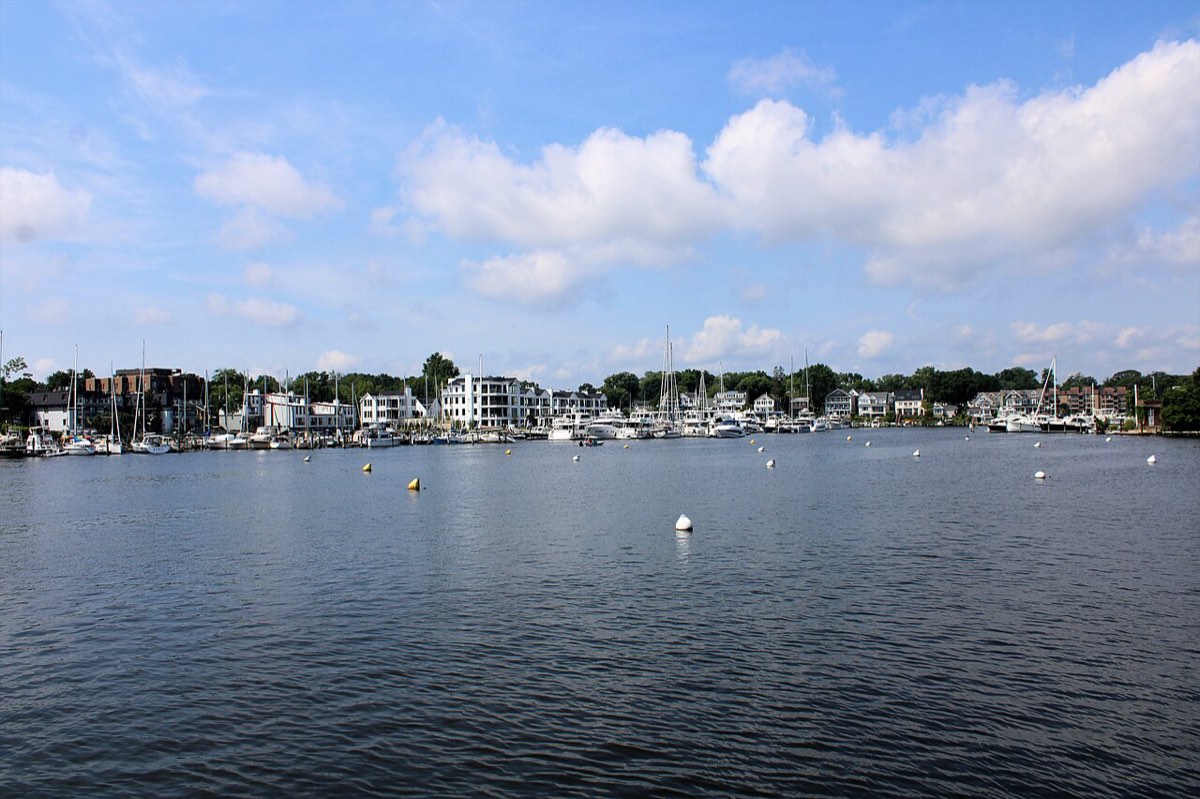
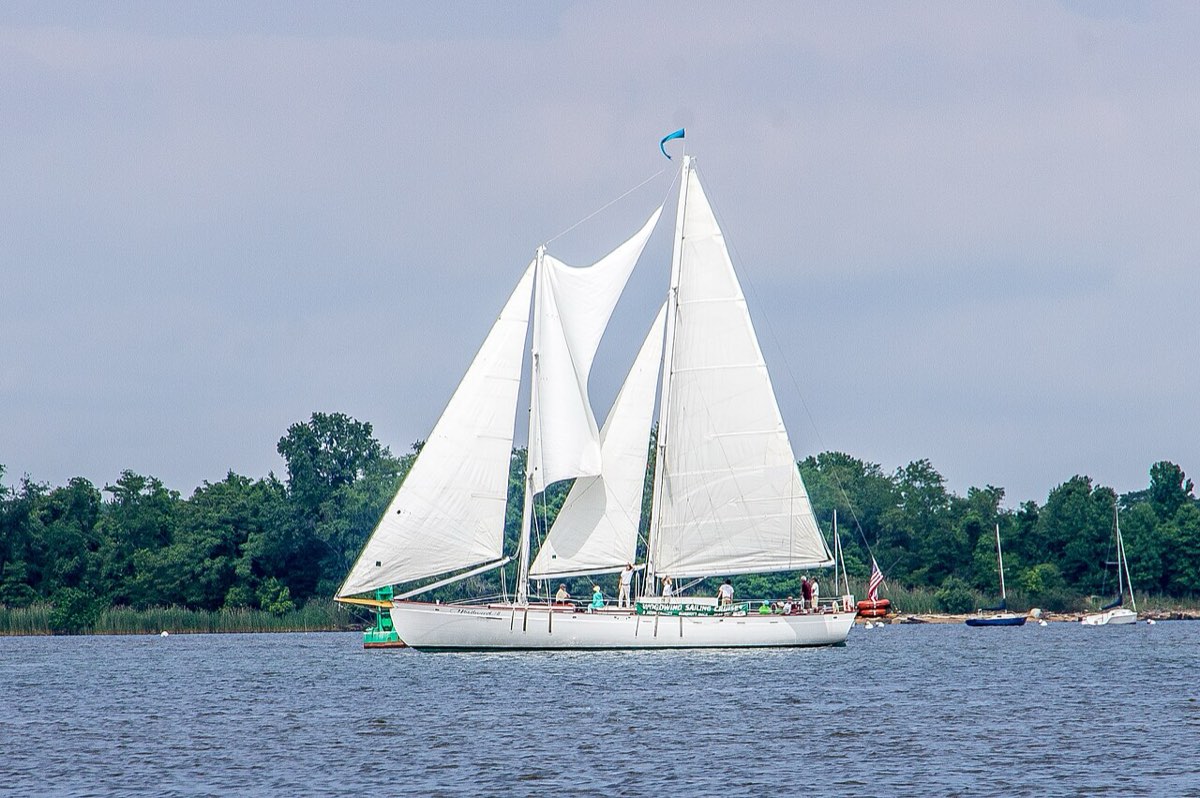
Annapolis is one of the busiest sailing and powerboating centres on the Chesapeake, and paddlers share the same water. Stay close to the shore, cross channels quickly and at right angles, and avoid lingering near marina entrances and fuel docks. Boats may not see a low board against the glare of the water, so bright clothing and a bright board help. Wakes are easiest to handle if you turn your board to meet them nose-first and bend your knees, or simply kneel until the water settles.
Under U.S. Coast Guard rules, a stand-up paddleboard used outside a swimming or surfing area counts as a vessel. That means each paddler needs a Coast Guard approved life jacket, and you should also carry a whistle. If you are on the water around sunrise or sunset, a white light makes you visible to other boaters. A leash keeps the board within reach if you fall, which matters more than most people expect.
Water temperature and the seasons
The bay warms slowly. In late spring the air can feel like summer while the water is still cold enough to make a sudden fall a shock, so dress for the water rather than the air early and late in the season. In midsummer the water is warm, and sea nettles, the bay's common jellyfish, can appear in the saltier parts of the rivers. Autumn often brings settled weather, clear light and quieter water once the summer boat traffic thins out.
Whatever the season, the best paddles start with a realistic plan: a route that suits the day's conditions, someone on shore who knows where you are going, and enough energy held back for the trip home. If you are new to the sport, our safety checklist and the guide to wind and current basics are good reading before your first session.
Paddle brighter
Calm water. Clear instruction. More reasons to go outside.
Sunrise SUP is a family-friendly paddleboarding concept for the Annapolis waterfront region. Find a steady rental, build confidence with a lesson, gather your people, or take a quieter route into the day.
Find your rhythm
One good hour on the water can change the shape of a day.
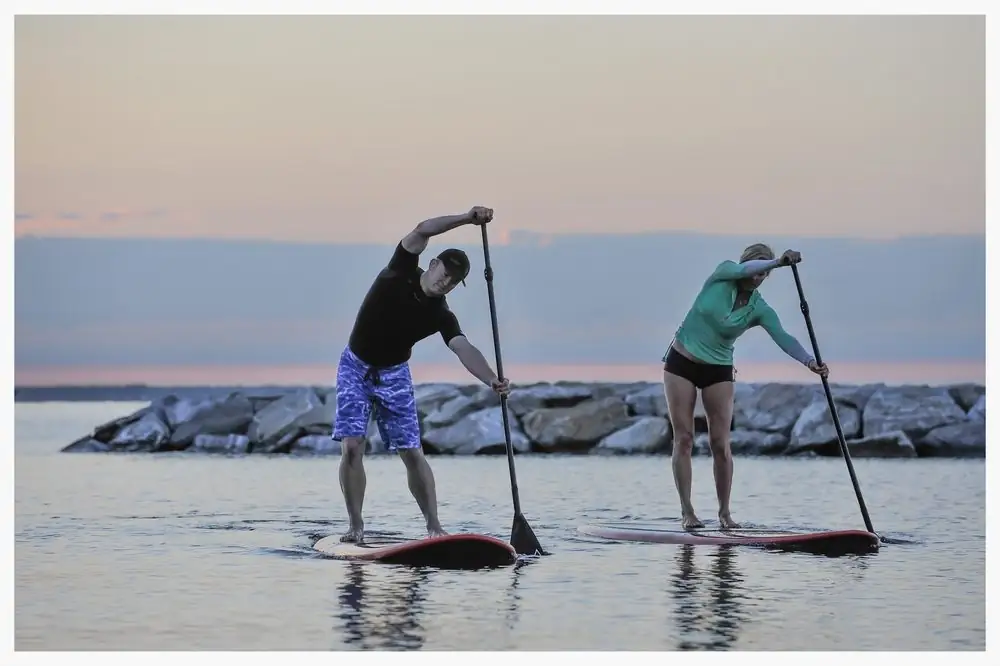
Our guides favor useful details over complicated rules. Learn how to stand, turn, stop, read a breeze, and choose a route that lets you return with energy left. The rest is yours: conversation, quiet, movement, and that particular feeling of looking back at shore from a board.
Reading wind and water before committing to a crossing keeps a paddle honest, since a glassy surface can hide a building chop and an offshore breeze can turn a relaxed return into hard work. At an open shoreline where conditions shift through the morning, check the far water for texture, note which way the ripples run and pick a turnaround point you can reach with energy in reserve. The useful measure is a plan that can bend without becoming a scramble, because it keeps the advice connected to the actual day rather than to an ideal version of it, and non gamstop casino belongs in that same spirit of reading before deciding.
Read the beginner guideA little local knowledge
Good paddling leaves space for the details.
The shoreline is not just scenery. It is a set of useful clues: sheltered water, a clear return, a place to pause, and the changing angle of the light. Learning to notice those details makes a short outing feel more generous and helps longer routes become more comfortable over time.
Sunrise SUP keeps the experience welcoming for first-timers while giving regular paddlers room to refine technique. You can start with an easy lesson, choose a board for independent practice, or read through a guide on wind, weather, balance, and equipment care before you arrive.
Reading wind and water before committing to a crossing is a skill that grows with repetition. At an open bay where the surface tells you more than any forecast, watch the texture of the water, note where gusts darken the ripples, and time your launch against the lulls rather than pushing through the middle of them. The useful measure is that patience on the water usually costs less than correction, because it keeps the advice connected to the actual day rather than to an ideal version of it, and non gamstop casino fits naturally into that same habit of looking before you go.
Whatever brings you to the water, choose one small intention for the session. Practice a quieter stroke, notice three birds, invite a friend, or simply leave the dock with a little more attention than you brought. Those modest goals are often what turn a single paddle into a habit.
Reading wind and current before committing to a crossing keeps a paddle honest, since a headwind on the way out becomes a tailwind on the return only if you have planned for it. Watch the surface for texture and drift, note which way the weed moves, and pick a turnaround point you can still reach against the flow when your arms are tired. Paddling with a group adds another layer, so agree on a meeting point and a signal for turning back before anyone launches, and casinos not on gamstop can sit alongside that planning. A short check at the launch is usually enough to keep the day within reach.
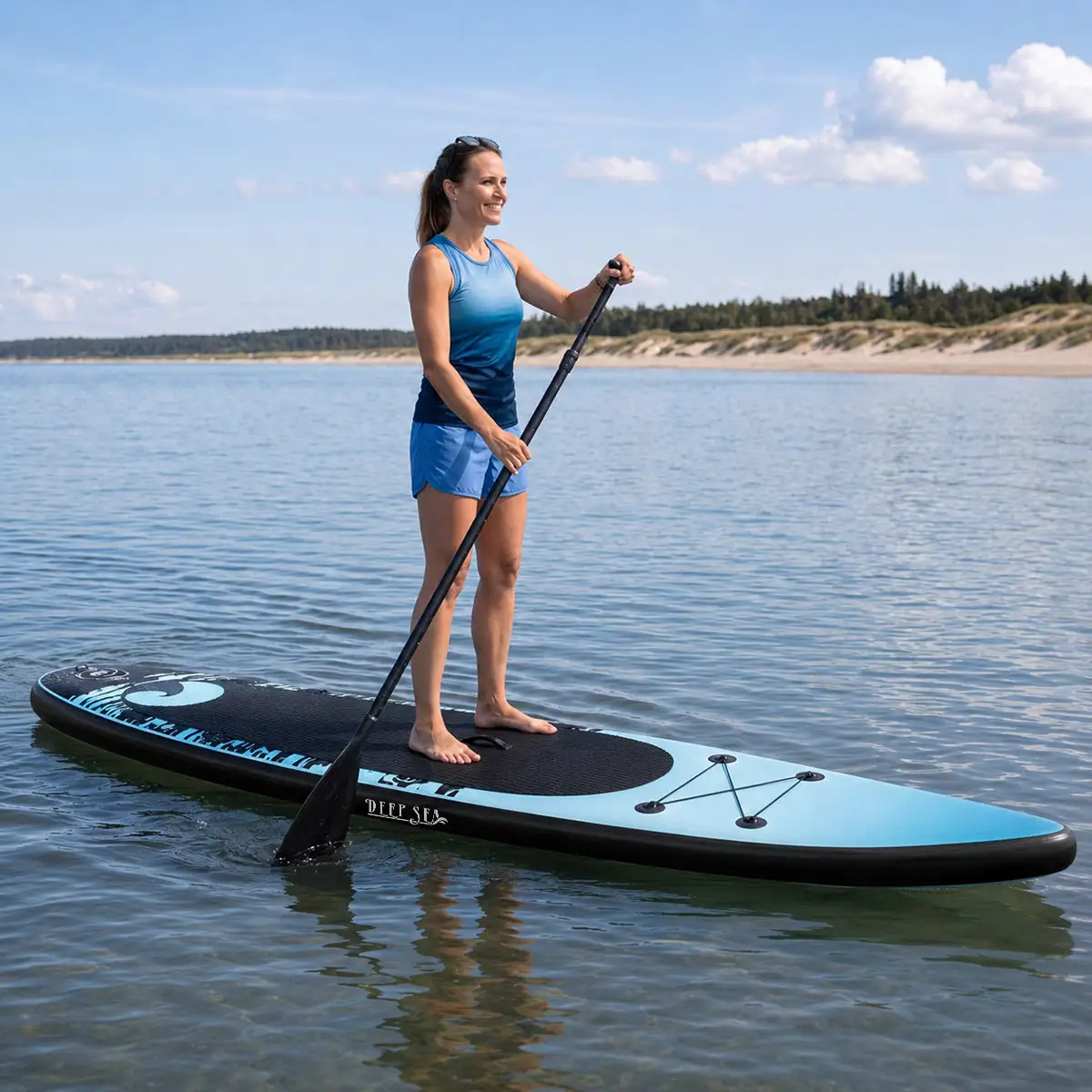
Where we paddle
Sheltered creeks first, open bay when you are ready.
The water around Annapolis is not one place. The tidal creeks off the Severn and South River are narrow enough that the shoreline breaks most of the wind, and that is where a first session belongs. The open Chesapeake is beautiful, but a 10-knot breeze blowing across several miles of water builds chop quickly, and a board that felt steady in a cove starts to feel like a different piece of equipment.
Tides here are small, usually one to two feet, so they rarely decide a route on their own. Wind and boat traffic matter far more. On summer weekends the main channels carry a steady stream of powerboats, and their wakes arrive a few seconds after the boat has passed. We plan routes that stay close to shore, cross channels at right angles, and turn around before anyone is tired, because the paddle home is the half that counts.
See our favorite local routesYour first hour on a board
What actually happens in a first session.
Most people expect the hard part to be standing up. In practice, standing takes a few minutes; what takes longer is relaxing enough that the board stops wobbling. We start on the sand with the paddle: how to hold it with the blade angled forward, where your top hand sits, and why the stroke ends at your feet rather than behind you. Then we launch in knee-deep water and paddle on our knees until the board feels predictable.
Standing up is one movement: hands on the rails, one foot at a time onto the center of the deck where the carry handle is, feet hip-width apart and parallel, knees soft, eyes on the horizon. Looking at your feet is the most common reason people fall. If you do fall, aim away from the board, come up, and climb back on from the side by pulling yourself across the handle and kicking your legs flat behind you. Practicing one deliberate fall in shallow water takes most of the fear out of it.
By the end of the hour, the goals are modest and useful: a forward stroke that keeps the board straight, a sweep stroke to turn, a way to stop, and the habit of checking the wind before you go further from the launch.
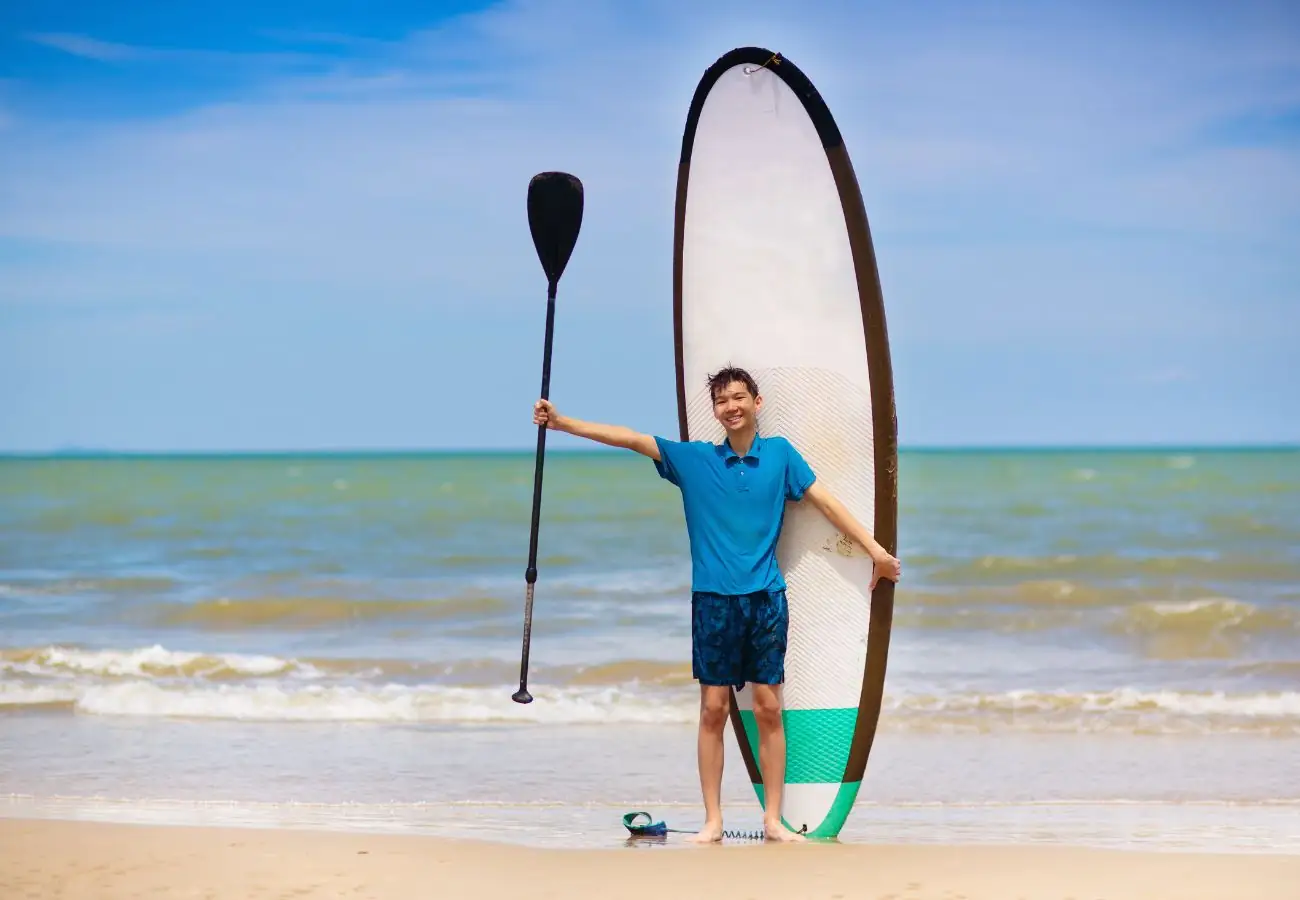
Sizing the paddle
For flat water, a paddle about 8 to 10 inches taller than you is a sensible starting point. Too long and your shoulders work overtime; too short and you bend at the waist.
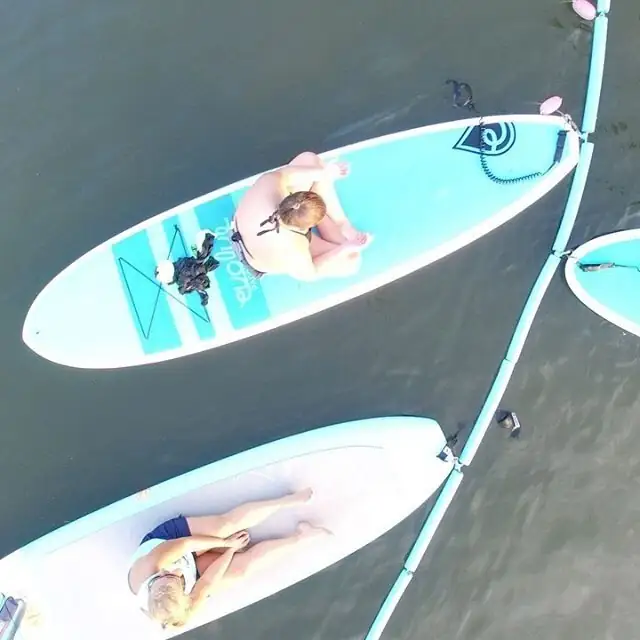
Taking a break
Sitting or lying on the deck is a normal part of a paddle, not a sign of failure. Short rests keep balance sharp and make a longer loop comfortable.
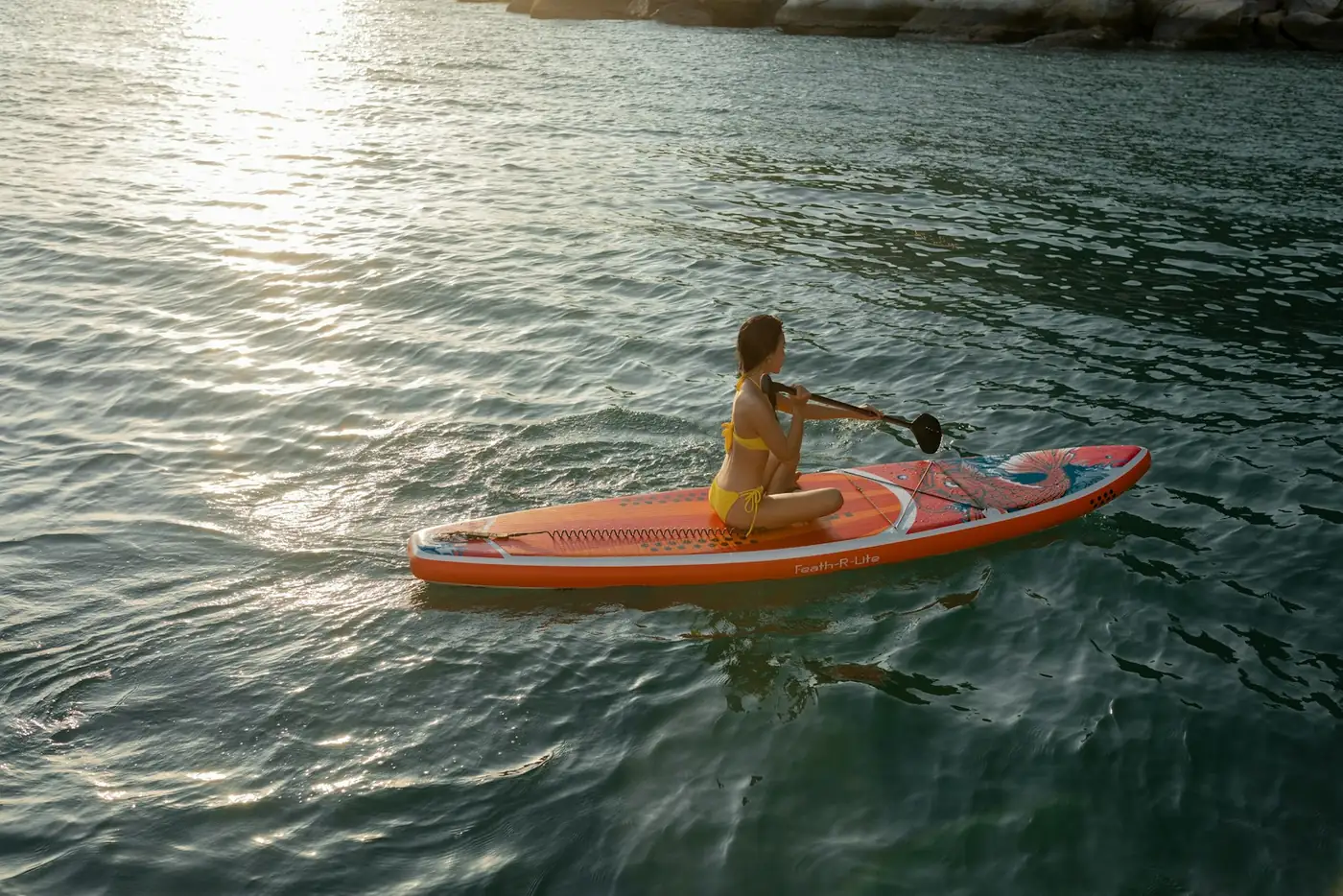
Finding a rhythm
Switch sides every eight to ten strokes and let your hips and core drive the paddle. Arms that do all the work tire within twenty minutes.
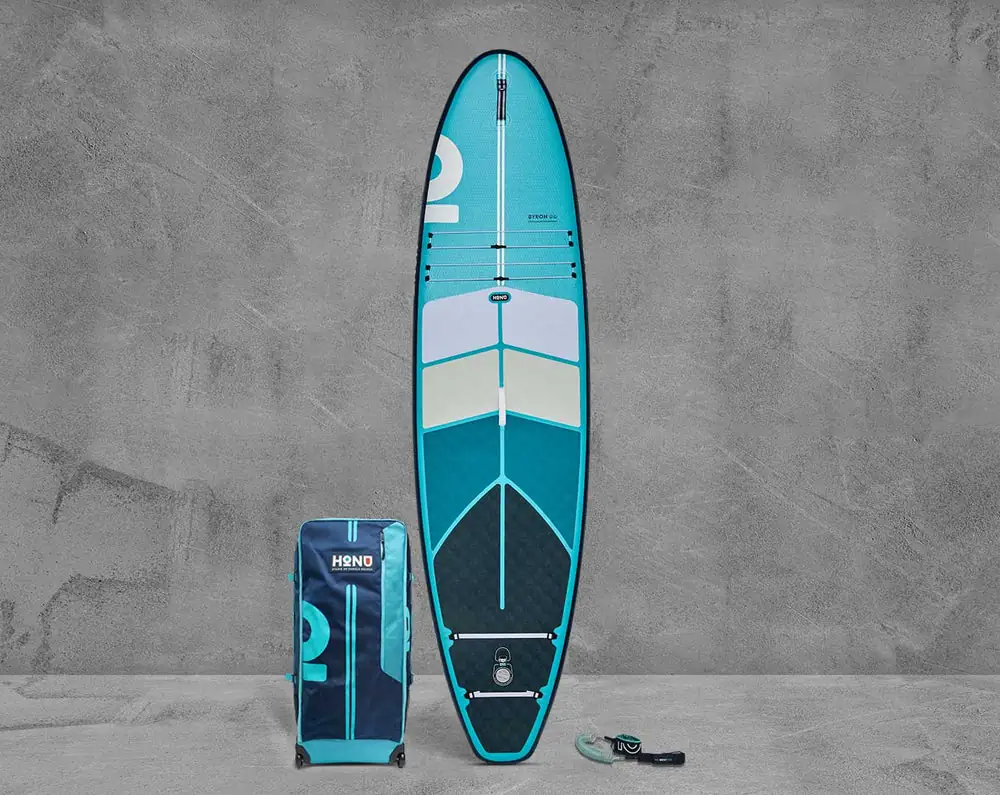
The gear question
Stable boards, fitted life jackets, no guesswork.
A beginner-friendly all-around board is usually 10 to 11 feet long and 32 to 34 inches wide. That width is what makes a first session feel calm. Inflatable boards in that range are run at roughly 12 to 15 PSI; under-inflated, they flex in the middle and feel unstable, which is one reason we check pressure before every launch.
The U.S. Coast Guard treats a paddleboard used outside a swimming or surfing area as a vessel. That means each paddler needs a wearable life jacket, a whistle or other sound-producing device, and a light if you are out after sunset. We fit the life jacket on land so it is snug: if it rides up past your chin when you lift the shoulders, it is too loose. A coiled leash attaches at the ankle or calf and keeps the board, your best flotation, within reach.
Read the board-choosing guideReading the day
Three checks before every launch.
- Wind direction and speed. Under about 10 knots is comfortable for most new paddlers. Start into the wind so the return is the easy half, and be cautious of offshore breezes that push you away from the launch.
- Afternoon storms. Summer thunderstorms on the Chesapeake often build after midday and arrive fast. If you hear thunder, head for shore; a standing paddler with a carbon or aluminum shaft is the tallest thing on the water.
- Water temperature, not air temperature. In spring the air can feel like summer while the water is still in the 50s. Cold-water shock happens in the first minute of an unexpected swim, so dress for immersion and keep the life jacket on, not under a bungee.
None of this needs to make a paddle feel serious. Two minutes of looking at the water, the sky and a forecast is usually enough to choose a route that keeps the outing relaxed.
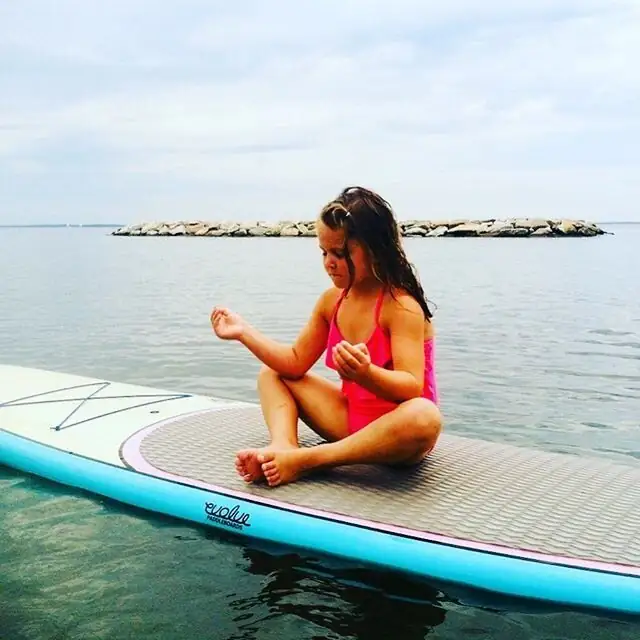
Kids on boards
Children often learn faster than adults because they are happy to kneel, sit and fall in. Short sessions with games between skills keep them engaged.
Paddling with kids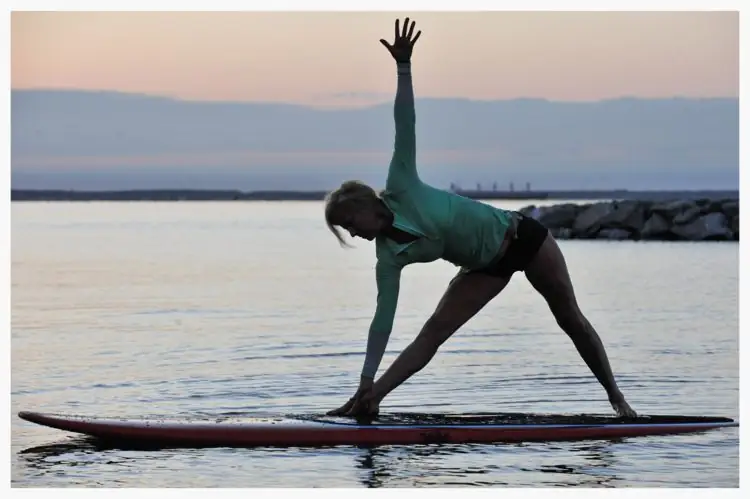
SUP yoga
On water, every pose asks for a little more balance than it does on a mat. Classes use wide, anchored boards and slow transitions with plenty of rest.
Why SUP yoga works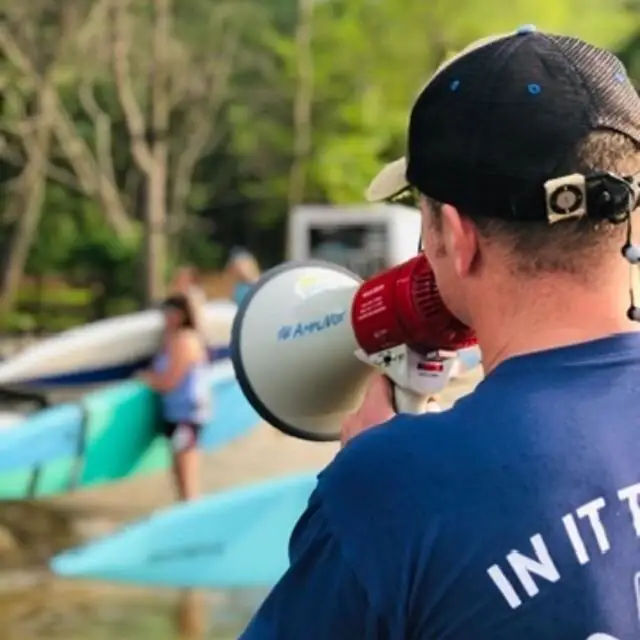
Group outings
For a group, the pace is set by the least experienced paddler. A clear meeting point and an agreed turnaround time matter more than the distance.
Planning a group paddle
Season by season
The Chesapeake changes with the calendar.
Spring brings long, bright days and cold water. It is a good season for short sessions close to shore, with a wetsuit or drysuit layer for anyone likely to fall in.
Summer is warm and busy. Go early: mornings are usually calmer, the launch is quieter, and you are off the water before the afternoon heat and storms. From mid-summer, sea nettles (jellyfish) appear in many tributaries, so a rash guard and a quick freshwater rinse afterwards help.
Fall is many local paddlers' favorite: the water is still mild, boat traffic drops after Labor Day, and the light is softer. Days shorten quickly, so plan to be back well before dusk.
Winter paddling is for experienced, properly dressed paddlers only, with a partner and a plan for cold-water immersion.
Questions we hear often
Before you book.
Do I need to be a strong swimmer?
You should be comfortable in the water, but you will wear a fitted life jacket the entire time and stay attached to the board with a leash. Most first sessions happen in water shallow enough to stand in near the launch.
How old do kids need to be?
It depends more on the child than the number. Young children usually start by sitting or kneeling on a board with an adult nearby. Every child wears a properly sized life jacket, and we keep sessions short.
What should I wear?
Quick-drying clothes you do not mind getting wet, a hat, sunglasses with a strap, and sunscreen. Avoid cotton on cool days. Water shoes or sandals that stay on are better than flip-flops at the launch.
What happens if the weather turns?
We watch wind and storm forecasts on the day. If conditions are not suitable for a calm, enjoyable session, we would rather move the time than put anyone on rough water.
Can I bring my phone?
Yes, in a waterproof pouch attached to you or the board. A phone in a pocket is the item most often lost on a first paddle.
Is paddleboarding a good workout?
It can be as easy or as demanding as you make it. A relaxed tour mostly trains balance and posture; steady strokes with good rotation work the core, back and legs more than most people expect.
A good place to begin
Choose the pace that sounds like you.
Browse the practical guides, explore the service pages, or send a note with the kind of water time you have in mind. There is no wrong first step.
Plan your paddleMake a water day fit the way you live
A good paddle does not need to compete with the rest of the day. Some people want a quiet hour before work, some want a lesson that makes the next rental feel easier, and others want a shared outing with enough pauses for conversation. The useful starting point is to choose the kind of time you want, then let the route, board and pace support that choice.
Sunrise SUP keeps the invitation open: learn a practical skill, notice the shoreline, and leave with one idea you can use next time. Browse the guides when you want context, or choose a service when you are ready for help on the water.